


读后感
用户873689
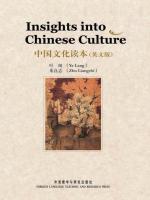
A Journey Through the Essence of Chinese Culture: Reflections on The
Essential Chinese Culture Reader (English Edition) After finishing The
Essential Chinese Culture Reader (English Edition), I felt as if I had
taken a fascinating journey spanning thousands of years, wandering
through the vivid landscapes of China’s history, philosophy, art and
daily life. This book is not merely a collection of cultural facts
translated into English; it is a bridge that connects Eastern and
Western perspectives, allowing global readers to grasp the true spirit
of Chinese culture beyond stereotypes and superficial impressions. What
strikes me most is its ability to balance academic accuracy with
readability, making profound cultural concepts accessible to both those
familiar with China and those encountering its culture for the first
time. One of the most impressive parts is the chapter on traditional
Chinese philosophy, which focuses on Confucianism, Taoism and
Buddhism—the three pillars that have shaped Chinese people’s values for
centuries. The book explains Confucianism’s core values of ren
(benevolence), yi (righteousness) and li (propriety) in simple English,
without losing their original connotations. It made me realize that
these values are not outdated rules but living principles that still
guide Chinese people’s behavior today: from respecting elders in family
gatherings to prioritizing harmony in interpersonal relationships. The
section on Taoism is equally enlightening, especially its emphasis on wu
wei (non-action) and harmony with nature. Unlike the Western view of
conquering nature, Taoism teaches that humans should be humble
participants in the natural world, a concept that feels increasingly
relevant in today’s era of environmental crises. Reading these
explanations in English also gave me a new perspective as an English
education major—I began to think about how to teach these abstract
philosophical terms to my future students, using examples from both
Chinese and Western cultures to help them build connections. The
book’s exploration of traditional Chinese art forms, such as
calligraphy, painting, poetry and opera, is another highlight. It goes
beyond describing the techniques of these art forms to uncover the
cultural meanings behind them. For instance, it explains that Chinese
landscape painting is not just a depiction of mountains and rivers; it
is a reflection of the painter’s inner state and their pursuit of
harmony between humans and nature. The chapter on Chinese poetry,
featuring works by Li Bai and Du Fu, introduces readers to the beauty of
classical Chinese verse through elegant translations that preserve the
rhythm and emotion of the originals. As someone who will teach English
in the future, I appreciate how the book demonstrates the importance of
accurate and sensitive translation in cultural communication. A good
translation is not just about converting words from one language to
another; it is about conveying the cultural context and emotional
nuances that make a work of art meaningful. What makes this book stand
out is its focus on the continuity of Chinese culture, showing how
traditional customs and values have evolved and persisted in modern
China. The chapters on festivals, food and family life paint a vivid
picture of how ancient traditions are still celebrated today: the
reunion dinners during the Spring Festival, the mooncakes shared on the
Mid-Autumn Festival, and the respect for ancestors passed down through
generations. It also addresses the challenges of preserving traditional
culture in a rapidly modernizing world, such as the tension between
urbanization and the protection of ancient villages. This balanced view
avoids the trap of romanticizing the past or dismissing tradition as
irrelevant; instead, it shows that Chinese culture is a dynamic and
living entity, constantly adapting to new times while retaining its core
identity. As an English education major preparing to teach high school
students, this book has given me valuable insights into cross-cultural
teaching. It has shown me that introducing Chinese culture to
English-speaking students (or teaching Chinese students about their own
culture in English) requires more than just listing facts—it requires
telling stories that resonate across cultures, finding common ground
between Eastern and Western values, and encouraging students to think
critically about cultural differences and similarities. For example,
when teaching about Confucianism’s emphasis on family, I can compare it
to the Western value of family bonds; when discussing Taoism’s view of
nature, I can connect it to Western environmental movements. This
approach not only helps students learn about Chinese culture but also
fosters their intercultural competence, which is essential in today’s
globalized world. In conclusion, The Essential Chinese Culture Reader
(English Edition) is a remarkable book that offers a comprehensive and
insightful introduction

 京公网安备 11010802032529号