

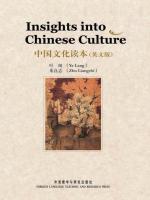
A Review of "A Reade
用户824102
In
an era of increasingly frequent cross-cultural exchanges, works that
can accurately and vividly interpret Chinese culture for
international readers are invaluable. "A Reader of Chinese
Culture" (English Edition) stands out as an outstanding window
into the essence of Chinese civilization, bridging the gap between
Eastern and Western perceptions with its systematic structure,
accessible language, and profound cultural insights. For foreign
readers eager to understand China beyond stereotypes and for Chinese
readers seeking to convey their cultural heritage globally, this
book is an indispensable guide.
One
of the most striking strengths of this book lies in its
comprehensive and hierarchical content
arrangement. Unlike many fragmented cultural introductions
that focus solely on iconic elements like pandas or kung fu, this
reader adopts a holistic perspective, covering the entire spectrum
of Chinese culture from ancient to modern times. It navigates
through philosophical foundations such as Confucianism, Taoism, and
Buddhism, which have shaped the Chinese way of thinking for
millennia; delves into artistic treasures including calligraphy,
painting, poetry, and traditional opera, revealing the aesthetic
pursuits of the Chinese people; and also touches on daily cultural
practices like tea ceremony, traditional festivals, and family
ethics, making abstract cultural concepts tangible. Each chapter is
logically organized, moving from core principles to specific
manifestations, allowing readers to build a systematic understanding
of Chinese culture step by step rather than being overwhelmed by
disjointed information.
The
exquisite translation and accessible narrative
style are another highlight that deserves high praise.
Translating cultural texts is notoriously challenging, as many
concepts are deeply rooted in specific historical and cultural
contexts and lack direct equivalents in English. However, the
translators of this book have achieved a remarkable balance between
accuracy and readability. They not only faithfully convey the
original meaning of cultural terms—for example, explaining
"Ren" (benevolence) and "Li" (rituals) with
detailed annotations—but also use plain and fluent English to avoid
overly academic jargon. This approach enables readers of different
backgrounds, whether they are students, professionals, or general
enthusiasts, to engage with the content effortlessly. Additionally,
the book is supplemented with appropriate historical background
introductions, helping foreign readers better grasp the context in
which various cultural phenomena emerged.
Beyond
its role as a cultural introduction, this book also serves as a
catalyst for cross-cultural empathy. It avoids
the one-sidedness of cultural propaganda and instead presents
Chinese culture with an objective and open attitude. For instance,
when discussing traditional social systems, it neither blindly
glorifies nor arbitrarily criticizes but explains their historical
origins and social functions, allowing readers to understand the
rationality behind certain cultural practices within their specific
historical framework. This objective presentation helps break down
cultural prejudices and enables foreign readers to see China as a
dynamic and complex civilization rather than a collection of
simplistic labels. At the same time, it encourages Chinese readers
to view their own culture from an international perspective,
fostering a more profound sense of cultural confidence and identity.
If
there is any room for improvement, it might be the relatively
limited inclusion of contemporary cultural elements. While the book
excels in introducing traditional Chinese culture, a greater focus
on modern cultural phenomena—such as the development of Chinese
contemporary art, the influence of digital media on cultural
expression, or the integration of traditional culture into modern
life—would make the narrative more comprehensive and resonate more
with younger international readers. Nevertheless, this does not
diminish the book's core value as a classic introduction to
traditional Chinese culture.
In
conclusion, "A Reader of Chinese Culture" (English
Edition) is a high-quality cultural reader that successfully
combines comprehensiveness, accuracy, and readability. It not only
provides a systematic and in-depth overview of traditional Chinese
culture but also contributes significantly to promoting
cross-cultural communication and mutual understanding. Whether you
are a foreign reader curious about China or a Chinese reader
striving to share your culture with the world, this book is well
worth reading. It is more than just a book; it is a meaningful
dialogue between civilizations.

 京公网安备 11010802032529号