


Book Review
23级公英一班吴佳琪
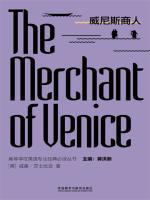
Reading The Merchant of Venice was a more complex and uncomfortable
experience than I expected. On the surface, it is a comedy: young lovers
overcome obstacles, and by the end, most characters are happily married.
However, the darker elements—especially the fate of Shylock, the Jewish
moneylender—make it hard to laugh or celebrate. The central conflict
revolves around Antonio, a Venetian merchant, who borrows money from
Shylock to help his friend Bassanio woo the wealthy heiress Portia.
Shylock, who has suffered endless anti-Semitic abuse from Antonio,
agrees to lend the money on one shocking condition: if Antonio cannot
repay it on time, Shylock may take a pound of his flesh. When Antonio’s
ships sink and he defaults, the courtroom scene becomes the heart of the
play. What fascinated me was the character of Shylock. In his famous
speech—“Hath not a Jew eyes?”—he speaks a universal truth about shared
humanity, and for a moment, I felt deep sympathy for him. Yet, as the
play progresses, his stubborn demand for flesh (not money) turns him
into a villain. Meanwhile, Portia, disguised as a young lawyer, defeats
him using a brilliant technicality (he can take flesh but not a single
drop of Christian blood). In the end, Shylock is forced to convert to
Christianity and lose his wealth. I found this ending deeply troubling.
Was justice truly served? Or was it another form of cruelty dressed up
as mercy? Ultimately, The Merchant of Venice forces readers to ask
difficult questions about justice, mercy, prejudice, and revenge. It is
not a comfortable comedy but a thought-provoking drama that remains
painfully relevant today. I believe Shakespeare intended us to leave the
theater uneasy, still debating who the real “merchant” and who the real
“villain” is.

 京公网安备 11010802032529号