


Book Review
23级公英一班吴佳琪
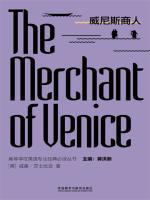
Reading The Merchant of Venice for the first time, I expected a
lighthearted comedy about a clever young woman who saves her husband’s
friend from a cruel moneylender. After all, the play is often taught as
one of Shakespeare’s comedies, ending with multiple weddings and a
return to harmony. But once I finished the final act, I felt anything
but lighthearted. Instead, I found myself deeply unsettled, questioning
who the real villain is, whether justice was truly served, and why a
play written over four hundred years ago still feels so painfully
relevant today. The Merchant of Venice is not a simple comedy; it is a
rich, troubling, and deeply human exploration of prejudice, revenge,
mercy, and the limits of the law. The character that haunts me the
most is, of course, Shylock. From the moment he appears on stage, he is
treated with contempt. Antonio has spat on him, called him a
“misbeliever” and a “cutthroat dog,” and yet expects to borrow money
from him as if nothing has happened. When Shylock reminds Antonio of
this abuse, Antonio proudly admits it and says he will likely do it
again. This is shocking to a modern reader. We are used to stories where
the villain is clearly evil, but here the “hero” is openly cruel to a
man because of his religion. Shakespeare does not let us forget this. He
gives Shylock one of the most powerful speeches in all of literature:
“Hath not a Jew eyes? Hath not a Jew hands, organs, dimensions, senses,
affections, passions? … If you prick us, do we not bleed? If you tickle
us, do we not laugh? If you poison us, do we not die? And if you wrong
us, shall we not revenge?” In that moment, the play stops being a simple
story about a greedy moneylender and becomes a devastating critique of
religious hatred. Shylock is not a monster; he is a human being who has
been beaten down by a society that refuses to see him as human. Yet
at the same time, Shylock is not innocent. His demand for a pound of
Antonio’s flesh is horrifying, and his obsession with revenge becomes
self-destructive. When his daughter Jessica runs away with a Christian,
taking his money and jewels, Shylock’s grief is painfully real – he
cries “My daughter! O my ducats! O my daughter!” and the audience is
meant to see the confusion in his mind between human love and material
wealth. But that moment of humanity does not excuse his desire to kill
Antonio. Shakespeare refuses to make Shylock a pure victim or a pure
villain. He is both. And that ambiguity is what makes the play so
powerful. The courtroom scene is the heart of the play, and it is
here that Shakespeare forces us to ask difficult questions about justice
and mercy. Portia arrives disguised as a young lawyer named Balthazar,
and she gives one of the most famous speeches in English literature:
“The quality of mercy is not strained. It droppeth as the gentle rain
from heaven upon the place beneath. It is twice blest: It blesseth him
that gives and him that takes.” These words are beautiful. They speak of
mercy as a divine, voluntary act that lifts both the giver and the
receiver. In theory, Portia is begging Shylock to show mercy to Antonio.
But the irony is that Portia herself, and the Christian society she
represents, have shown no mercy to Shylock. They have mocked him, robbed
him of his daughter, and now they come to him asking for mercy. When
Shylock refuses, Portia cleverly turns the law against him. She points
out that the bond allows him to take a pound of flesh but not a single
drop of Christian blood. Since that is impossible, Shylock is defeated.
Then the penalties fall upon him: he must give half his wealth to
Antonio and the other half to the state. Antonio adds one more
condition: Shylock must become a Christian. This is the moment that
shatters any comfortable reading of the play as a comedy. Forced
conversion is not mercy; it is a form of spiritual violence. The
Christians speak of love and forgiveness, but their actions toward
Shylock are cruel and vengeful. Portia, who moments earlier preached
mercy, shows none. Antonio, who claims to be a good man, strips Shylock
of his identity. The play ends with Shylock broken, humiliated, and
alone. And the Christian characters go off to celebrate – Bassanio and
Portia, Gratiano and Nerissa, and even Antonio, who has been saved from
death. The message seems to be that justice in Venice is only for those
who belong to the dominant group. Outsiders like Shylock are tolerated
only as long as they serve a purpose and keep quiet. When they dare to
demand equal treatment under the law, they are crushed.

 京公网安备 11010802032529号