


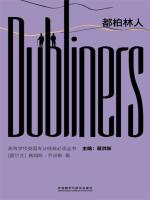
Dubline
.
Book Review: Dubliners by James Joyce Introduction Published in
1914, Dubliners is a collection of fifteen short stories written by
James Joyce, one of the most influential modernist writers. Set in
Dublin at the turn of the 20th century, the work portrays ordinary
people from all walks of life, including children, young lovers,
laborers, housewives and elderly citizens. Instead of telling dramatic
adventures, Joyce focuses on their daily lives, inner struggles and
unspoken sorrows. This book is not merely a record of Dublin’s social
scenes, but a profound exploration of human nature, social stagnation
and spiritual confusion, making it a timeless classic in world
literature. Main Content Overview The stories in Dubliners are
arranged in a subtle order, roughly following the timeline of human
growth from childhood to old age. Early stories like The Sisters and An
Encounter describe children’s naive perspectives and their first contact
with the dark side of the adult world. Araby tells a young boy’s
innocent crush and his final disillusionment when he fails to buy a gift
for his beloved girl at the bazaar. The well-known story Eveline depicts
a young woman who hesitates between escaping her oppressive family and
sticking to her duties, and finally gives up the chance for freedom out
of fear and restraint. Other stories reveal more complex social
phenomena: some men indulge in drinking and idleness, trapped by
laziness and desire; housewives struggle in trivial family matters and
social games; elderly people linger in old memories and lonely lives.
The closing story The Dead reaches the peak of the whole collection. The
protagonist Gabriel realizes the emptiness of his own life after
learning about his wife’s past love, falling into deep meditation on
life, memory and death. All these independent stories together draw a
complete panorama of Dublin’s society. Core Themes The most central
theme running through the whole book is spiritual paralysis. At that
time, Dublin was trapped in economic backwardness, rigid traditions and
heavy religious shackles. Most locals lived a repetitive and lifeless
life. They were dissatisfied with the status quo but lacked the courage
to change. They longed for warmth and dreams, yet were always defeated
by reality, responsibility and inner timidity. This kind of paralysis is
not only personal, but also a common social illness. Joyce used ordinary
individuals’ fates to reflect the overall stagnation of Irish society.
Another important theme is disillusionment and the loss of dreams. Many
characters in the stories hold simple hopes: a boy dreams of sweet love,
a young man looks forward to a brand-new life abroad, and ordinary
people expect to get rid of trivial troubles. However, all these
beautiful illusions are eventually broken by cruel reality. Joyce calmly
presents such disappointments, showing how harsh life wears away
people’s enthusiasm and ideals. In addition, the book also reflects
the heavy influence of tradition, family and religion. For the people of
Dublin, tradition and family obligations are like invisible chains.
Religious beliefs bring spiritual comfort to some, but also set rigid
rules that restrict people’s thoughts and choices. These external
forces, together with people’s inner weakness, firmly lock them in their
original living conditions. Writing Features Joyce’s unique writing
style is a major highlight of Dubliners. First of all, he widely uses
the literary technique of epiphany. An epiphany refers to a sudden
moment of insight, when characters suddenly see the truth of their lives
and their own predicament. Most stories end with such silent epiphanies.
There are no intense conflicts or passionate outbursts, but the subtle
emotional changes leave endless thoughts for readers. Secondly,
symbolism can be seen everywhere. Dim houses, endless dust, gloomy
weather and quiet streets all symbolize the depressed atmosphere of
Dublin. Distant bazaars, the sea and foreign lands stand for distant
freedom and unattainable dreams. Simple images carry rich implied
meanings, making the stories profound and thought-provoking. Besides,
Joyce adopts restrained and objective narration. He rarely comments on
characters or expresses his own emotions directly. He just records
words, actions and inner thoughts plainly. This calm tone makes the
sadness and helplessness in the stories more powerful, allowing readers
to truly feel the helplessness of the characters. Conclusion
Dubliners is a sincere and profound portrait of a city and its people.
With delicate observation and exquisite writing skills, James Joyce
exposes the spiritual predicament of Dubliners in an era of stagnation.
The ordinary people in the book are far away from us in time and space,
but their confusion, hesitation and helplessness are still easy to
resonate with modern readers. This collection of stories is not only a
valuable literary work reflecting Irish history and society,

 京公网安备 11010802032529号