


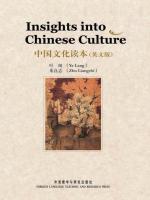
Reflections on An Introduction to Chinese Culture
用户872224
Reading An Introduction to Chinese Culture felt like walking through a
museum with a wise and gentle guide. The book doesn't overwhelm you with
academic jargon or endless dates. Instead, it opens doors — one by one —
into the core of Chinese civilization. What the Book Covers The book
spans a broad range: philosophy (Confucianism, Daoism, Buddhism), art
(calligraphy, painting, opera), daily life (tea culture, food,
festivals), and traditional values like filial piety and harmony. Each
chapter is compact and self-contained, making it easy to dip in and out.
I especially appreciated how it connects ancient ideas to modern life —
for instance, showing how Confucian respect for elders still shapes
family dynamics today. What Stood Out Three things left a deep
impression: First, the emphasis on "harmony." The book
repeatedly returns to the Chinese ideal of balance — between humans and
nature, between individual and community, between tradition and change.
This isn't just an abstract concept. It's visible in everything from the
layout of a traditional courtyard to the philosophy behind Chinese
medicine. Second, the practical wisdom of everyday culture. I found the
chapters on tea and food surprisingly profound. A simple tea ceremony
turns out to be a meditation on stillness and hospitality. The round
table at a family dinner symbolizes unity. Details like these made me
realize how much philosophy is embedded in ordinary life. Third, the
visual richness. Although I read a text-only edition, the vivid
descriptions of paintings, gardens, and temples create strong mental
images. You can almost see the misty mountains in a landscape scroll or
hear the clatter of a calligraphy brush. Critical Thoughts If I had to
note a limitation: the book leans toward an idealized portrait. It
celebrates the beauty of Chinese culture but rarely addresses historical
complexities or dark chapters. That's understandable for an introductory
text, but it leaves the reader wanting a more rounded picture. Also,
some chapters on philosophy move a bit fast — beginners may need
supplementary reading to fully grasp the difference between, say, Daoist
wu-wei and Buddhist emptiness. Who Should Read This Anyone curious
about China but unsure where to start. It's especially useful for
students, travelers, or professionals doing business with Chinese
partners. In a world where East and West often misunderstand each other,
a book like this builds bridges — not through grand theories, but
through simple, human stories about tea, art, and family. Final
Takeaway After finishing, I felt less like I'd "studied"
China and more like I'd been invited into someone's home. The book
shares Chinese culture not as an exotic curiosity, but as a living
tradition full of quiet wisdom. That, perhaps, is its greatest gift.

 京公网安备 11010802032529号