


观后感
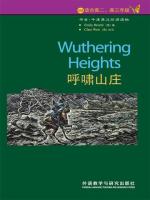
Wuthering Heights: A Tormented Ode to Love and Vengeance
Emily Brontë’s only novel, Wuthering Heights, published in 1847 under the pseudonym Ellis Bell, stands as a towering anomaly in 19th-century English literature. Unlike the refined romances and social satires of her contemporaries—including her sister Charlotte’s Jane Eyre—Brontë’s magnum opus plunges readers into a raw, unflinching world of primal passion, corrosive vengeance, and the blurred line between love and obsession. Set against the bleak, windswept moors of Yorkshire, the novel rejects sentimentalism, instead laying bare the darkest recesses of human nature. More than a love story or a gothic tale, Wuthering Heights is a profound exploration of how class oppression and unrequited devotion can twist the soul, leaving a legacy of destruction that outlives the tormentors and the tormented.
At the core of the narrative is the tempestuous bond between Heathcliff and Catherine Earnshaw—two souls forged in the harshness of the moors, yet torn apart by the rigid class hierarchy of their time. Heathcliff, a nameless orphan taken in by Mr. Earnshaw, is treated as an outsider from the start: a dark-skinned, silent boy amid the privileged Earnshaws. His only solace is Catherine, whose wild spirit mirrors his own. Their connection is not a tender romance but a visceral, almost existential union—Catherine famously declares, “I am Heathcliff,” a line that encapsulates their merging of identities. Yet when Catherine chooses to marry the wealthy Edgar Linton to secure social status, she shatters this bond. Her choice is not an act of betrayal, but a tragic surrender to societal expectations, and it dooms both her and Heathcliff to a life of agony.
Heathcliff’s transformation from a scorned orphan to a ruthless avenger is the novel’s driving force. Rejected by Catherine and tormented by her brother Hindley, who treats him as a servant after their father’s death, Heathcliff vanishes, returning years later as a wealthy, cold-hearted man. His sole purpose becomes vengeance: he seeks to destroy everyone who wronged him, using manipulation, cruelty, and even marriage to Edgar’s sister Isabella as weapons. What makes Heathcliff more than a mere villain is his unwavering devotion to Catherine—even in his cruelty, he remains haunted by her. When Catherine dies in childbirth, his grief is apocalyptic; he digs up her grave, curses her soul to haunt him, and spends the rest of his life longing for reunion. Brontë refuses to romanticize his vengeance or his pain, yet she compels readers to recognize the injustice that created him—a victim of class prejudice who becomes a monster, trapped in a cycle of violence he cannot escape.
Brontë’s masterful use of setting elevates the novel’s thematic weight. The moors, with their harsh winds, desolate landscapes, and ever-present mist, are not mere backdrop but a reflection of the characters’ inner turmoil. Wuthering Heights, the crumbling manor where Heathcliff and Catherine grow up, is a symbol of chaos, passion, and decay—its name derived from the Yorkshire dialect for “stormy heights,” a fitting metaphor for the tempest within its walls. In contrast, Thrushcross Grange, the Lintons’ elegant home, represents the stifling respectability of upper-class society, a world that crushes authenticity and passion. The tension between these two spaces mirrors the conflict between primal instinct and societal constraint, a battle that destroys Catherine and corrupts Heathcliff.
The novel’s complex narrative structure—filtered through the eyes of Mr. Lockwood, a visiting tenant, and Nelly Dean, the housekeeper—adds layers of ambiguity. Nelly, a witness to all the tragedy, is not an impartial narrator; her judgments of Catherine’s selfishness and Heathcliff’s cruelty shape the reader’s perception, yet her own complicity in the events (she often fails to intervene) invites questioning. This narrative distance allows Brontë to explore moral ambiguity: there are no clear heroes or villains, only flawed individuals trapped by their circumstances and their own desires. Catherine is both a victim of society and a selfish manipulator; Heathcliff is both a monster and a broken soul; even the seemingly innocent Lintons are complicit in upholding the class system that fuels the tragedy.
What makes Wuthering Heights timeless is its unflinching examination of love’s darker side. Unlike conventional romances that celebrate mutual respect and compromise, Brontë presents a love that is consuming, destructive, and transcendent. Heathcliff and Catherine’s bond defies death—after his death, villagers claim to see their ghosts wandering the moors, a testament to a love that cannot be contained by life or death. Yet the novel also warns of the cost of such passion: Heathcliff’s vengeance destroys three generations, leaving only emptiness in its wake. Brontë suggests that when love is denied by society, it curdles into hatred, and when ambition is twisted by injustice, it becomes a force of destruction.
In a world that often romanticizes “perfect” love and moral certainty, Wuthering Heights remains a stark reminder of the complexity of human nature. Emily Brontë does not offer comfort or redemption; instead, she challenges readers to confront the darkness within themselves and the societies that shape us. The novel’s enduring power lies in its honesty—in its refusal to sugarcoat the pain of rejection, the corruption of vengeance, or the tragic consequences of class oppression. More than 170 years after its publication, Wuthering Heights still haunts readers, a testament to the power of literature to lay bare the soul’s most tormented truths.

 京公网安备 11010802032529号