

《中国传统文化关键词》读书报告
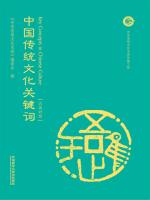
For international readers eager to decode the essence of Chinese civilization and domestic learners striving to present their cultural roots to the world, Key Words of Traditional Chinese Culture stands as an indispensable bridge, seamlessly connecting the profound wisdom of ancient China with the global audience. As a freshman stepping into the threshold of cross-cultural studies, I find this book far more than a simple glossary—it is a vivid, comprehensive guide that breathes life into abstract cultural concepts.
What strikes me most is the book’s meticulous approach to balancing accuracy and accessibility. Each keyword, ranging from philosophical pillars like Confucianism and Taoism to daily cultural elements such as tea ceremony and paper cutting, is accompanied by multi-layered explanations. It starts with a precise English translation, then dives into the historical origin of the term, followed by its evolution over dynasties, and finally, its contemporary relevance. For example, when introducing filial piety (xiao), the book does not merely translate it as “respect for parents”; instead, it elaborates on how this virtue shaped the family-centric social structure of ancient China, how it is reflected in classic texts like The Book of Filial Piety, and how it continues to influence modern Chinese values such as caring for the elderly. Such detailed elaboration helps readers avoid the common pitfall of superficial understanding, enabling them to grasp the cultural connotations behind the words.
Another highlight is the book’s thoughtful inclusion of practical examples and comparative perspectives. For each keyword, the editors have added real-life stories, literary quotes, or even cross-cultural comparisons to facilitate comprehension. When discussing yin-yang, for instance, the book not only explains its role in traditional Chinese medicine and feng shui but also draws a parallel with the Western concept of “opposites attract,” helping readers from different cultural backgrounds find familiar entry points. Additionally, the English expression throughout the book is elegant and idiomatic, without the awkward literal translation that plagues many similar works. This makes it an ideal reference for college students like me who are learning to write academic papers or engage in cross-cultural communication.
Of course, no book is perfect. One minor shortcoming is that the book focuses more on the mainstream Han culture, with relatively limited coverage of ethnic minority cultural keywords such as Mongolian nadam or Tibetan thangka. However, this does not overshadow its overall value.
In conclusion, Key Words of Traditional Chinese Culture is a masterful work that unlocks the door to Chinese civilization. It is suitable for international students curious about China, domestic students majoring in English or cultural studies, and anyone who wishes to deepen their understanding of cross-cultural communication. For me, this book is not just a textbook for my freshman year studies; it is a lifelong companion that will guide me in exploring the rich tapestry of Chinese culture and sharing it with the world.

 京公网安备 11010802032529号