

读后感
The lazy sun shines, and the sound of the sea surges in silence.
Gulls not far away began to flock to their nests, chasing each other in the sunlight
One by one. I still remember one such evening, an old fisherman named Santiago, holding his net alone, narrowed his dull but very blue eyes and broke the silence with his deep voice, "It's time to go home again."
Yes, I like Santiago, and I like the old man, because he is the symbol of Hemingway's ideal of a perfect man. He is strong and generous and full of love, facing an irreversible fate. He is still mentally strong and tough. Hemingway also liked him, I think, whether in age, or spirit, they have something in common.
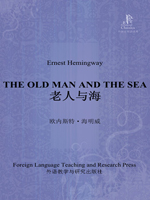
Ernest Hemingway, a profound philosopher born in Chicago, USA. He was influenced by his parents when he was young. His father loved fishing and the sea, and his mother loved literature and life. So did Hemingway, and in his middle age, when his literary attainments were at their most mature, he wrote the novella the Old Man and the Sea.
It was just after The Second World War. Hemingway joined the American Scarlet Letter corps and fought in Italy. Although he only wanted to feel the war, he also paid a heavy price -- countless shrapnel embedded wounds and memories of the war made him deny the good life.
When Hemingway returned home after World War II, he met fuentes, an old fisherman. Once, Hemingway's boat sank in a storm, Fuentes rescued Hemingway. Since then, Hemingway and Fuentes forged a deep friendship, and often went fishing together.
Fuentes went out to sea and caught a big fish, but because the fish was so big, it dragged for a long time and was attacked by a shark on the way back and returned with only a skeleton. Hemingway, a good observer of life, thought this would be a good story.
As Hemingway wrote: The old fisherman Santiago went eighty-four days without catching fish at sea. At first a boy named Manolin went with him, but after forty days without any fish, the boy was sent to another boat by his parents, because they thought it would be bad luck for him to go with the old man. Hemingway was wise not to let the story go bad all the time. Santiago finally caught a big fish on the 85th day, but after two days of dealing with the fish, he was finally taken by a shark. Santiago's eyes began to look tired, but not depressed. "A man is not born to be defeated. You try to destroy him, but you cannot defeat him." This is the life of Santiago, and Hemingway's spirit.
Hemingway is good at using symbolism to describe all kinds of image, the same things repeatedly the shark, it represents the dark forces, and starting from the age of five is living with the old fisherman's manolin, has a backbone and a strong sense of responsibility, and this is the foil from the side of San Diego, manolin also represents such a spirit, will be passed from generation to generation.
"The Old Man and the Sea" is worth touching, Hemingway can write such a philosophical work in that period, not only the portrayal of the spirit, but also the heart of the desire. He hoped that everything would be fine, but life was not. Santiago knows that too, which is why he is indifferent and confident about missing fish for several days in a row. I love San Diego. I love his confidence. Because faith has always been hard for me to come by.
All this is more beautiful ah, listen to the sea chicken crow, listen to the sea sound surging, I reluctantly turned around, looking at the real world I, looking at the "old man and the sea" the last few pages, looking at the back of the old man away, he really tired, such as Hemingway, need to rest.
As soon as Santiago turned around, I knew the story was over. But Hemingway still, through those thin pages, told me to never say die.


 京公网安备 11010802032529号